
I first came across fire cider on Instagram when an influencer shared a video of an absolutely glorious looking jar filled with all kinds of spicy veg and vinegar. Later that day, we were watching another influencer (Gaz Oakley) filling a jar full of goodies from his own garden (this is my dream one day!) and telling us it was homemade Fire Cider.
I’d never come across it before, and to be honest, although it looked super pretty in the jar, I wasn’t sure what it actually was. Do you drink fire cider? Use it as a medicine? Add it to food?
WIth a bit of further research, I guess, all of the above and more!
If you’ve got kids a similar age to ours, you’re in that nursery/pre-school/just started school era, you’ll completely understand the fear when you see a familiar phone number pop up in the middle of the day time. The “oh no, who’s sick now?!” moment. Once the colder months arrive, it can feel like we’re all just waiting our turn to catch the next thing going round.
Well, apparently this tonic is something that can help with that.
I’ll be honest, and “touch wood” and all that, but since improving our diet, cutting out UPFs and focusing on gut healthy foods, we’ve seen a LOT less illness in our house – which is something of a miracle considering our kids are under 6! And I feel like this fire cider is a nice addition to our rota of fermented and gut healthy foods. It’s absolutely PACKED with goodies.
I can’t claim it’s a miracle cure or anything, but as part of our everyday small changes towards an overall healthier lifestyle through what we eat, this is another little homemade ingredient.
Our homemade fire cider is a simple, traditional, spicy little thing that I’d call a lovely herbal ally to have packed away in the kitchen cupboards throughout the winter months, added to dishes for extra flavour, and maybe will kick sore throats in the butt!
This post may contain affiliate links, please read our disclosure policy for details.
What is fire cider, really?
Fire cider is a traditional herbal vinegar made by infusing apple cider vinegar with pungent ingredients like garlic, onion, ginger root, chili peppers, citrus, spices and herbs.
It’s often associated with herbalist Rosemary Gladstar and modern herbal remedies, but versions of spiced, infused vinegars have deep roots in folk medicine across cultures. The ingredients are typically things that:
- feel warming
- feel stimulating
- taste strong and pungent
- are often associated with traditional immune support
Think of it as a zesty infused vinegar that sits somewhere between a tonic, a condiment, and a very powerful salad dressing ingredient.
And the most important thing to understand is this:
There is no single correct recipe.
Traditional fire cider recipes vary wildly. Some include horseradish root, some don’t. Some are fiery hot, others are more aromatic. Some lean citrusy, others are deeply spicy. Some are sweetened heavily with raw honey, others only lightly.
The best fire cider is the one you actually make and actually use.
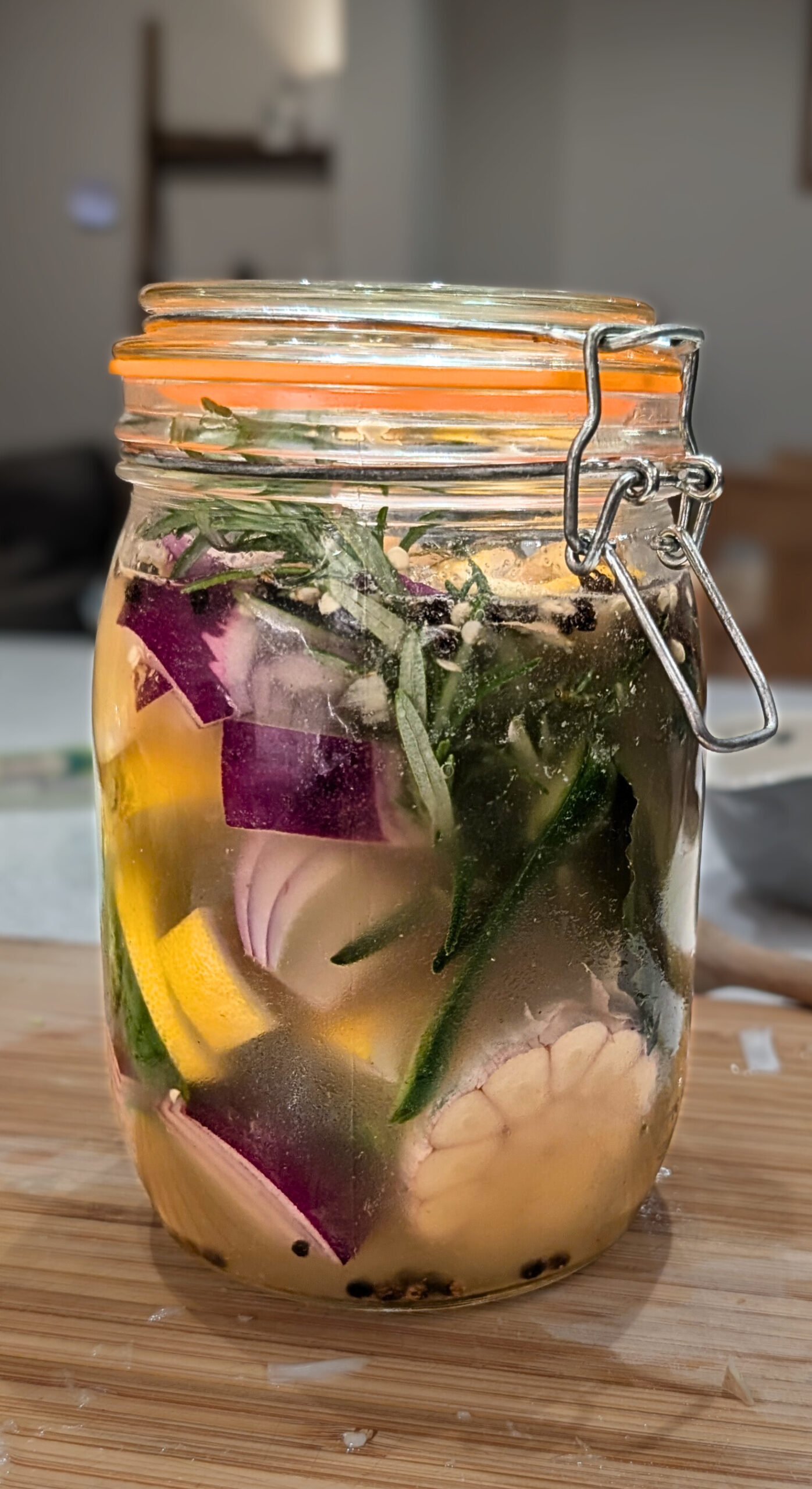
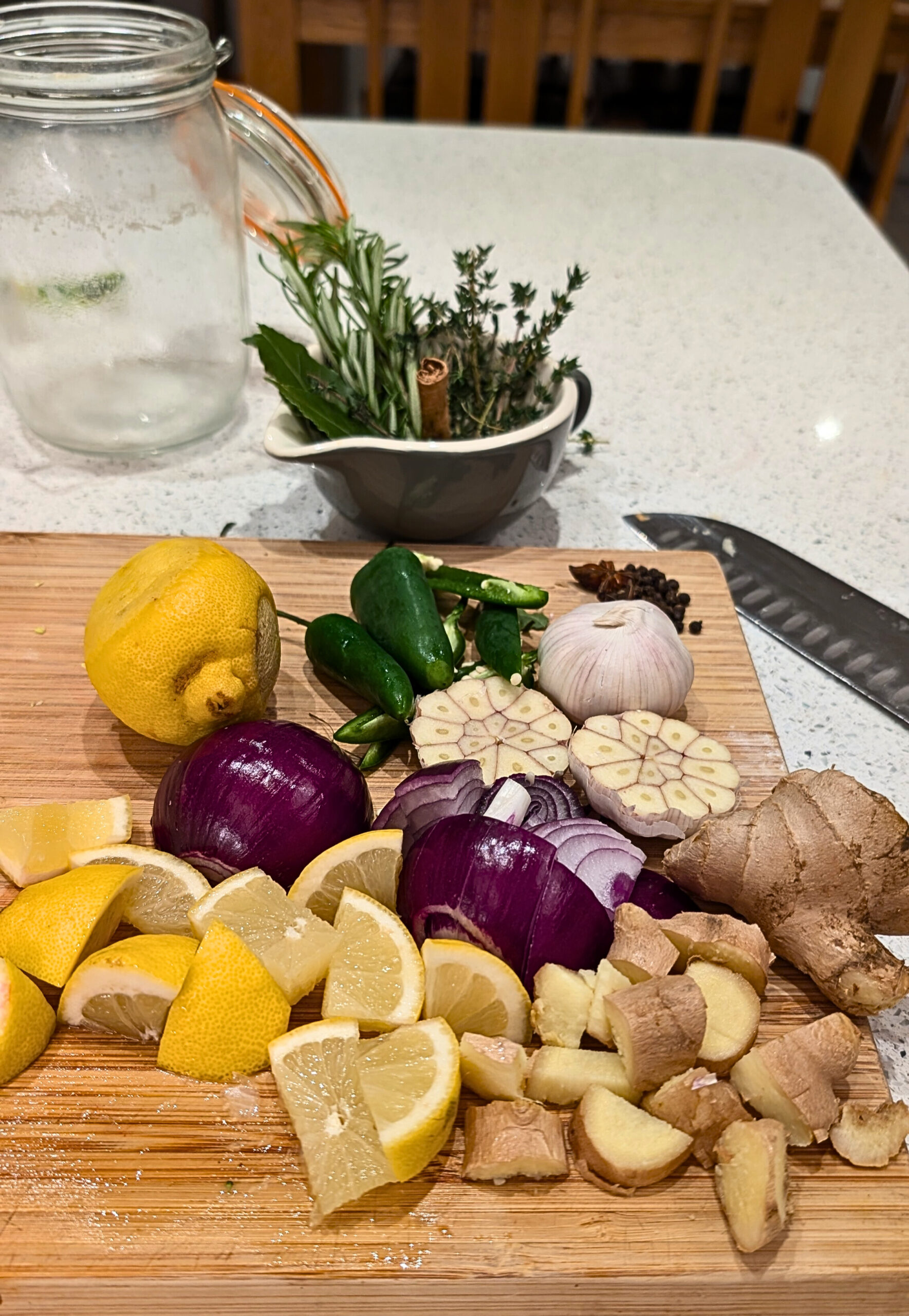
Why we started making it
As I mentioned, with little kids, we’ve been bomarded with winter illnesses in the past. Our eldest was a covid era baby, which meant that after lockdown, she got hit by pretty much everything going in one fell swoop. Her poor little immune system didn’t stand a chance! We believe that what you put into your body makes such a huge difference to how it can deal with what’s thrown at it, so finding gut healthy foods are so important to us.
But after learning more about UPF ingredients, it just doesn’t feel right to be throwing a little gummy vitamin at the kids and calling it a day (and I have to confess, they do still have these too – they love them!).
We wanted something that:
- used simple, organic ingredients
- felt rooted in tradition
- didn’t require perfection
- could live quietly in the background of our routine
Fire cider ticked all of those boxes, and honestly, it just looks really pretty too!
It also helped that I’d made my own raw apple cider vinegar over the summer using apple scraps from windfall apples (more on that in a future post). Using that as the base for a jar of homemade fire cider felt like such a satisfying full-circle moment.
The key components of fire cider
Rather than thinking of this as a strict recipe, I prefer to think of it as a formula. Most homemade fire cider includes some combination of:
What you’ll need:
You definitely don’t need all of these and you don’t need exact quantities either. You don’t need anything fancy from a specialist store, everything in ours came from a local grocery store (read: supermarket delivery… we try!)
A lot of fermented, canned or infused foods and drinks feel a bit intimidating at first – you worry you haven’t got the right quantities or the timing right. I think homemade fire cider is a brilliant beginner’s recipe as it’s more of a method and you can use whatever you’ve got and tweak it to your liking – you can’t really go wrong!
My Version of Homemade Fire Cider: Ingredients I used
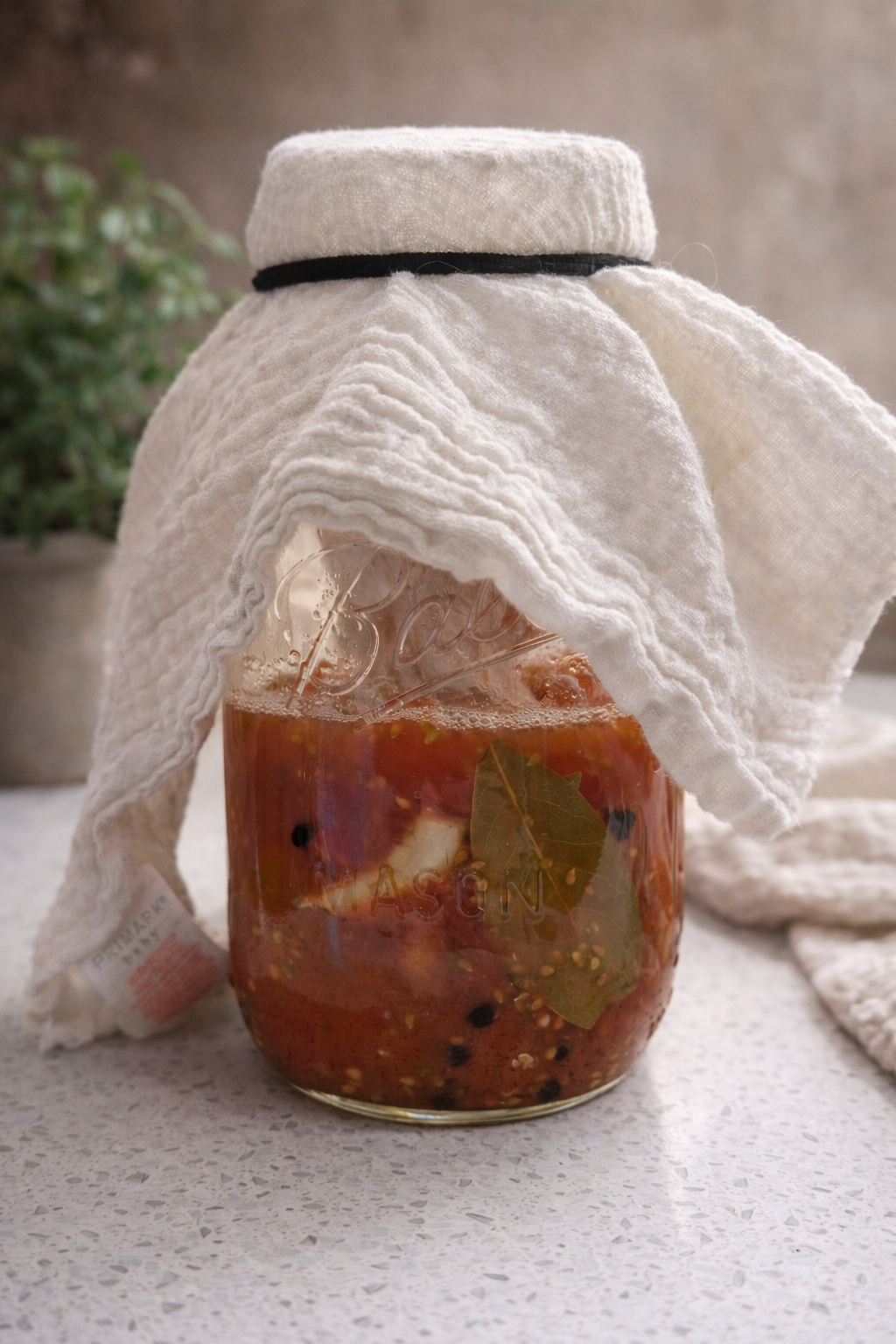
Here’s what went into my current jar of homemade fire cider:
- Apple cider vinegar (raw, unfiltered)
- Onion
- A whole bulb of garlic (cut in half across the middle)
- Lemon
- Fresh ginger root
- Fresh chili peppers
- Black peppercorns
- Cinnamon stick
- Star anise
- Fresh herbs: rosemary, thyme, bay leaf
- Raw honey (added after straining the infused fire cider, from my dad’s bees – we’re very lucky!)
Side note: I will die on the hill that bay leaf adds very little to most recipes. I add it here mostly out of tradition, because it adds another plant, and because we had some in the fridge. You are absolutely allowed to skip it!
How to make homemade fire cider
This is a super simple, low-pressure, easy to make fire cider recipe.
You will need:
- A clean jar
- A chopping board and knife
- A mesh strainer
- Your chosen ingredients
- Enough apple cider vinegar to cover everything
Method:
- Roughly chop your onion, ginger, lemon and chillies.
- Cut the garlic bulb in half horizontally (keep it whole, just expose the cloves).
- Add everything to a clean jar along with your herbs, spices and peppercorns.
- Pour apple cider vinegar over the top until everything is fully submerged, right up to the top of the jar.
- Seal and place in a cool place or dark place (a cupboard is perfect).
- Shake the jar every few days when you remember.
Then…you wait.
Most people leave it for anywhere from 2–6 weeks. Longer infusion generally means a stronger, more potent flavour.
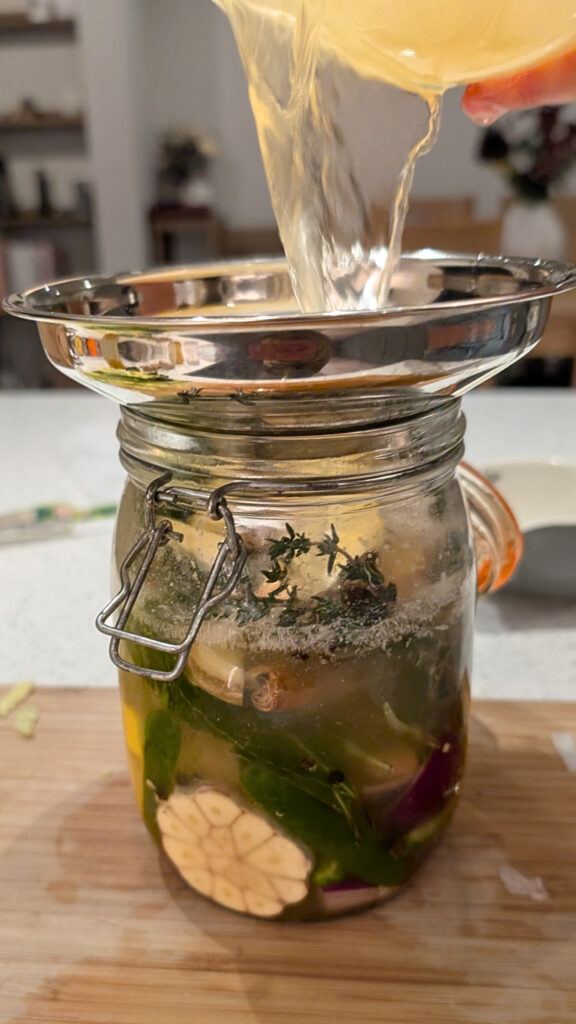
Straining and adding honey
Once your fire cider has infused to your liking, strain it through a mesh strainer into a clean jar.
At this point, I stir in raw honey to taste. This is completely personal:
- Some people like it barely sweetened
- Some prefer it much more mellow
- I go for somewhere in the middle
The honey balances the acidity and heat and makes it much easier to actually use regularly.
Honestly this batch is super zingy and pretty spicy, so the honey doesn’t do much except calm it down a little! I couldn’t give it to the kids straight as it is, so how do we use it?
How we’re actually using it (real life, no shot glasses!)
A lot of fire cider content online focuses on taking it by the shot glass at the first sign of cold symptoms. Maybe one day I’ll get there…but for now, we’re using it much more gently and probably for most people, realistically. (Honestly, I feel like I’d be tasting it all day long if I took it straight, but maybe this version of mine is just a tad too strong!)
Recipe Tips
Added to salad dressings for a zesty salad dressing with a kick
Stirred into tomato sauces for pasta or bolognese
Added to soups and stews for depth and warmth
Mixed into roasted vegetable marinades
Whisked into vinaigrettes with olive oil and mustard
A splash in lentil dishes or bean salads
Added to sautéed vegetables at the end of cooking
Used this way, it becomes less like a “remedy” and more like a deeply flavourful, versatile ingredient which feels far more sustainable.
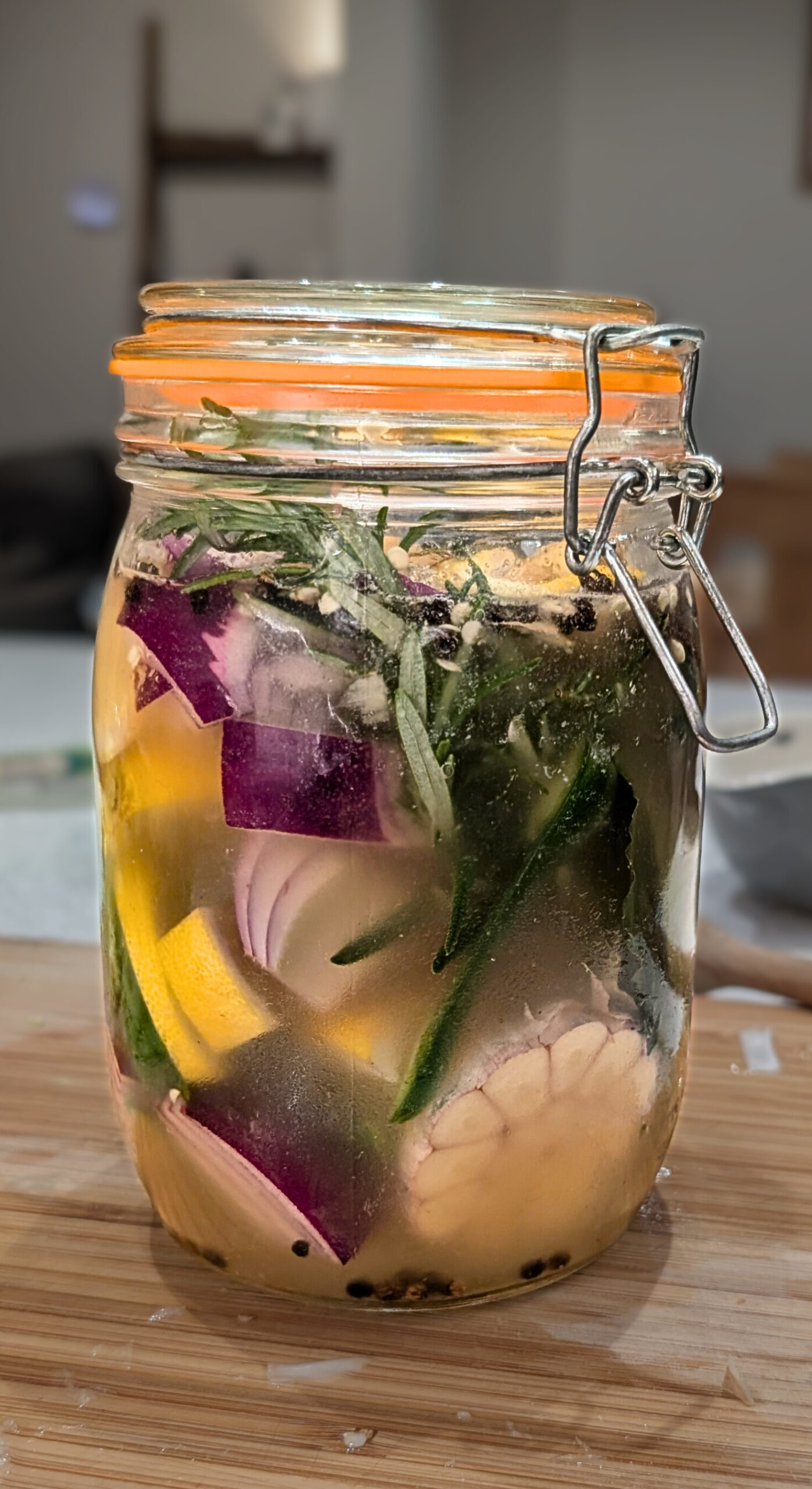
Homemade Fire Cider
Ingredients
Equipment
Method
- Prepare the produce by roughly chopping the onion, lemon, ginger and chillies; slice the garlic bulb in half to expose the cloves.
- Pack all solids into a clean glass jar along with herbs and spices.
- Pour in apple cider vinegar until everything is completely submerged and the jar is nearly full.
- Seal tightly and store in a cool, dark cupboard.
- Give the jar a gentle shake every few days.
- After 2–6 weeks, strain through a mesh strainer into a fresh jar and sweeten with raw honey if desired.
Notes
- Infusion time is flexible, shorter for a milder flavour, longer for a stronger, spicier vinegar.
- Keep all ingredients below the vinegar line to prevent spoilage.
- Store the finished cider in a cool, dark place for several months.
- Use in salad dressings, sauces, marinades or diluted in warm water if you enjoy the taste.
- Optional: dehydrate the strained solids and mix with salt to create a seasoning blend (great zero-waste idea for a future batch!).
What to do with the leftovers
I recently saw someone strain off their fire cider ingredients, then dehydrate the leftover solids and mix them with salt to create a spicy, aromatic seasoning.
I love this idea and will absolutely be trying it. I’ll share it in a future post once I’ve tested it properly and if it works! It feels very on-brand for reducing waste and making the most of every part of the process.
Tips for your own recipe
- Use organic ingredients where possible, especially for citrus and roots
- Keep everything submerged below the top of the jar to avoid mould (you can use a weight to keep it below the surface)
- If you don’t like very spicy foods, go easy on the chili peppers
- Taste it after a couple of weeks and decide whether you want to strain or leave it longer
- Write down what you used, you’ll forget by next year otherwise (ask me how I know!)
- There is no failure here, only different versions of your own recipe
A gentle note on health claims
Fire cider is often discussed in the context of herbal remedies, immune system support, flu season, traditional immune support, and so on.
I want to be clear: this is food. It’s a spicy tonic, a flavourful herbal preparation, and something people have used traditionally for generations. It contains ingredients that are often associated with health benefits, vitamin C, warming properties, and digestive support.
But it is not a replacement for medical care, prescription medications, or advice from a healthcare provider.
For me, it sits firmly in the category of small, supportive things that help me feel like I’m doing something good for my body, especially on cold winter days. And really, that’s enough!
I think what I love most about fire cider is how it embodies everything I’m trying to move towards with food and health:
- Not perfection
- No rigid rules
- It’s not expensive
- Simple, flexible, traditional practices
- Made from things you already recognise and probably have in your cupboard
- Adapted to your own kitchen and preferences
If you’ve been thinking of making a jar of homemade fire cider, consider this your sign. Use what you have. Adjust as you go. Trust your taste. Make it yours.
And if you do make your own recipe, I’d really love to hear what you put in it!