
What do you do when you find yourself with 3 extra punnets of cherry tomatoes that are starting to look a little bit worse for wear?
That was a question I found myself facing after I was a liiiiittle bit overzealous with the shopping and how many tomatoes I would be able to eat over the half term break, whoops!
Fortunately, I’d seen a Facebook post where someone shared a great way to use up your leftover tomatoes with a preservation method that means that they not only last longer, but that also makes them taste amazing and transform them into having good gut health benefits! Win win situation, I think!
What is lacto fermentation?
Lacto fermentation is a natural way of preserving food using salt and good bacteria.
When you add salt to vegetables (like cabbage or tomatoes), it creates the right environment for friendly bacteria called lactic acid bacteria to grow. These bacteria turn the natural sugars in the food into lactic acid. The lactic acid preserves the food, gives it that tangy flavour, and supports gut health.
In simple terms, lacto-fermentation is using salt and natural bacteria in anaerobic conditions to turn fresh vegetables into tasty, tangy, probiotic-rich foods.
The best way to get started on lacto-fermentation is to just give it a go!
Some lacto-fermented tomatoes recipes create a brine using water and salt which is then added to the tomatoes. For my version, I let the water in the tomatoes do the job itself. You’d be surprised just how much water comes out of tomatoes when they’re left to rest with just the right amount of salt!
How to Ferment Tomatoes
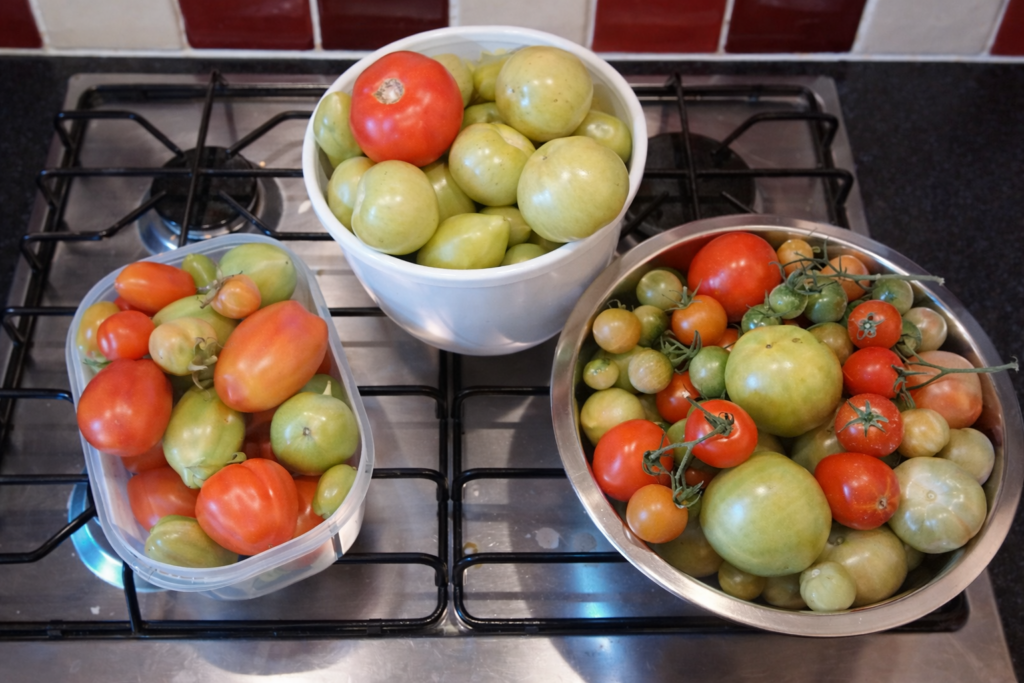
This time, I used a couple of small punnets of cherry tomatoes, but in the past I’ve used grape tomatoes and big beef tomatoes. I haven’t yet tried using green tomatoes but I believe that lacto-fermented green tomatoes are a great way to use up the fruit from the the end of the tomato season that isn’t ready yet. I once spent weeks in late summer trying to turn my unripe tomatoes from green to red by leaving them in direct sunlight on a window, and while a few did turn, most just went a bit bleh! Next time I’ll just try this easy way of fermenting them to get some delicious tomatoes full of beneficial bacteria!
The brilliant thing is that the tomatoes I used to make these were pretty standard, watery tomatoes. With a bit of salt brine and some fermentation time, they are now delicious tomatoes!
- Sort the tomatoes to remove bad ones.
- Prick the tomatoes or chop them.
- Weight the tomatoes and mix with the salt.
- Mix the tomatoes and salt then leave covered to draw out the water.
- Store in a jar with the tomatoes beneath the top of the brine under a fermentation weight for around 5-7 days. Add your flavourings here if you want to.
- Transfer to the fridge and enjoy within 3-4 weeks!
Recipe Tip!
To work out the correct grams of salt that you need for lacto-fermented tomatoes, you’re looking for 2% of the weight of the tomatoes.
For example, if you have 400g tomatoes, add 8g sea salt.
What to add to fermented tomatoes
The joy of fermented foods is that they’re so simple – often just the food itself and brine. But it’s fun to add flavours to your ferments too!
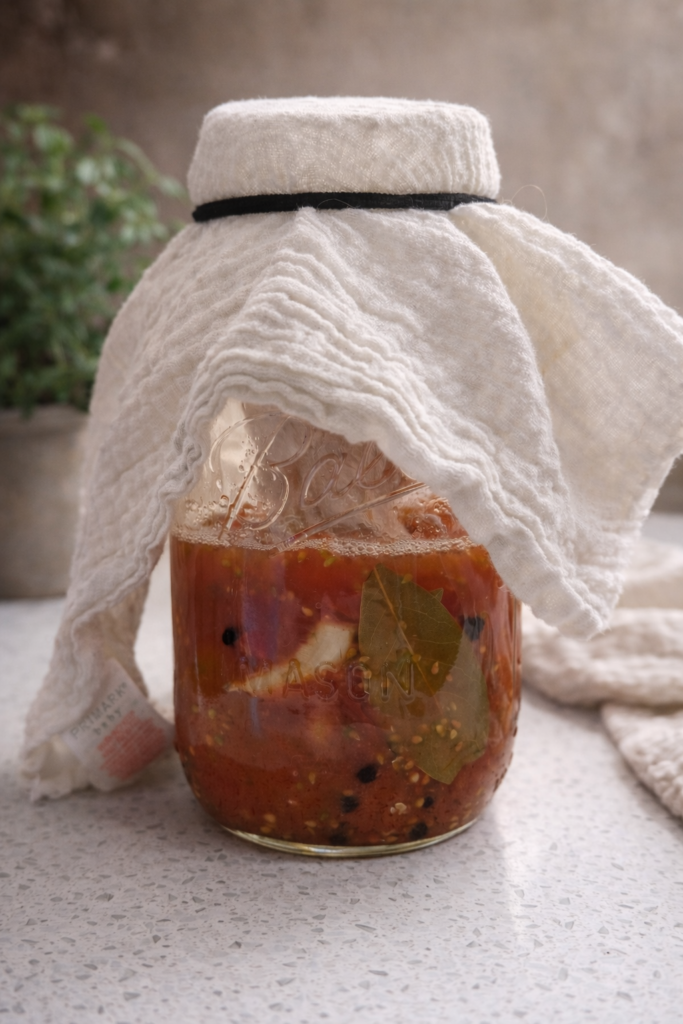
For this recipe, I added a teaspoon of peppercorns, peeled garlic cloves and a bay leaf. These have imparted a gentle tangy flavour. I’ve also seen fresh basil leaves recommended for fermented tomatoes (that sounds so good!) and some even add bell peppers or chillies for more of a zing!
Equipment (what we use)
The good thing about this method is that you really don’t need any special equipment or a fancy fermentation vessel! Here’s what we use:
How to eat fermented tomatoes
Honestly, the possibilities are endless!
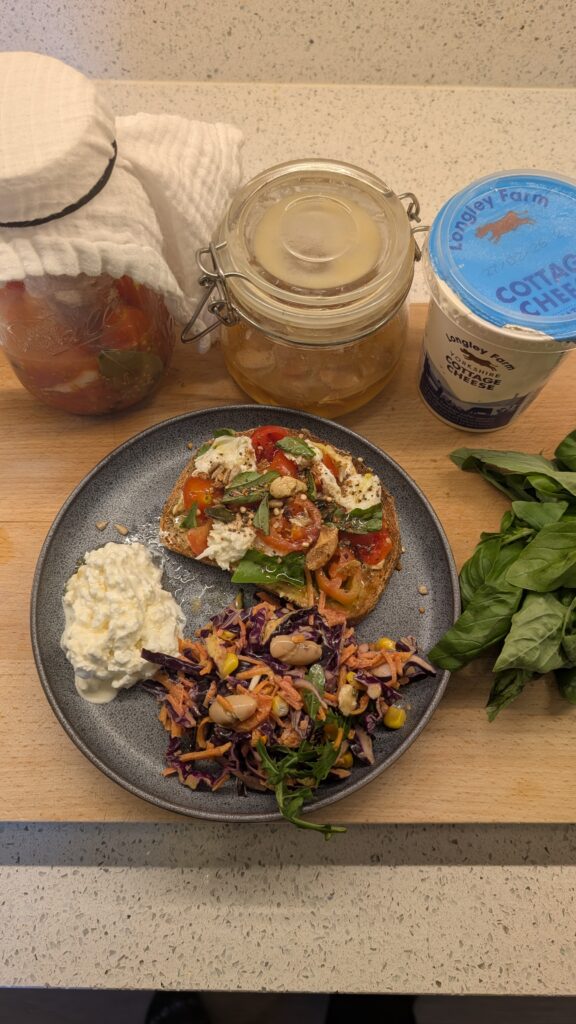
My favourite way to eat fermented tomatoes is with homemade hummus on a slice of sourdough bread, topped with a bit of mozzarella and olive oil, or cottage cheese (Ben says that as well as my plant points, he thinks I must be trying to get cheese points every day!).
You can also whizz up your jar of tomatoes into a yummy tomato sauce for dips or to be added to pizzas or pasta sauces.
We’ve chucked fermented tomatoes into spaghetti bolognaise before to get another fermented food into the kids. They also make a brilliant side dish served alongside grilled meats, roasted vegetables or even a simple omelette. That salty, tangy flavour lifts up otherwise plain meals so easily.
And honestly, I’ve just eaten them straight out of the jar with the fridge door open too before, they’re that good!
FAQ
Should my lacto-fermented tomatoes be fizzy?
This is a question I actually Googled after my first batch of lacto-fermented tomatoes! They should have a tangy flavor and a little fizz is completely normal. During the fermentation process, lactic acid bacteria produce carbon dioxide as they convert natural sugars into lactic acid. That slight carbonation is a sign that the good bacteria are active and doing their job.
They should smell pleasantly tangy and fresh, not rotten or unpleasant. If they smell off or strongly putrid, that’s when you’d want to discard them.
Should you keep lacto-fermented tomatoes covered with a lid or cloth?
This is generally a question of personal preference. I keep mine at room temperature with a muslin cloth over the top for a few days, then when they smell and taste tangy, I screw on a lid and move them into the fridge. Some people keep theirs in totally anaerobic conditions with a lid screwed on or a swing top jar lid shut. If you do this, remember to burp it every so often!
What are the benefits of fermented tomatoes?
Lacto-fermented tomatoes are more than just a way to avoid food waste. Because they’re fermented, they contain beneficial bacteria that can support your gut microbiome. A healthy gut plays a role in digestion, nutrient absorption and even your immune system, so adding small amounts of fermented foods into your diet can be a really simple way to support overall health.
Fermentation can also make certain nutrients easier for your body to absorb, and of course, you get that incredible tangy flavour that makes them such an easy addition to meals. As always, they’re not a magic fix for anything, but they are a delicious way to add more variety and fermented foods into your week.
There is a white film on top of my fermented tomatoes, is that okay?
If you spot a thin white film on the surface of your brine, don’t panic straight away! In many cases, this is kahm yeast. Kahm yeast is harmless, although it can sometimes give your ferment a slightly yeasty smell or taste. It usually forms if the tomatoes aren’t fully submerged or if they’ve been exposed to a bit too much oxygen. You can gently skim it off the top, make sure everything is properly submerged beneath the brine, and carry on fermenting.
What you don’t want to see is fuzzy mould in green, black or blue patches. If you see fuzzy growth or anything that looks like proper mould, it’s safest to throw the batch away and start again. Keeping everything under the brine and using a weight in your fermentation vessel really helps prevent this.
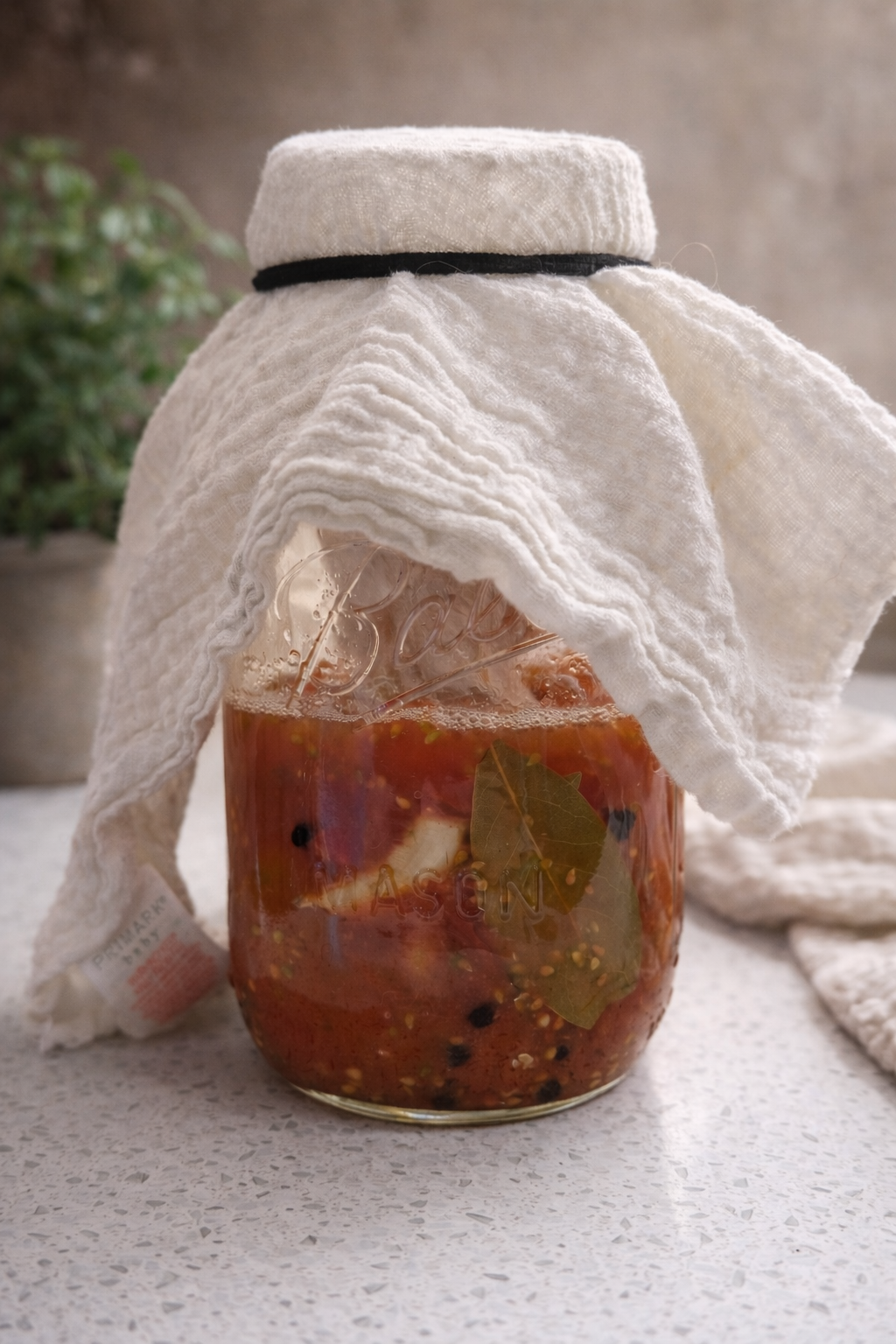
Lacto-Fermented Cherry Tomatoes
Ingredients
Equipment
Method
- Sort through the fruit to check the top of the tomatoes for mould. If they're a bit wrinkly, they're fine, but you don't want any mould getting into your ferment.
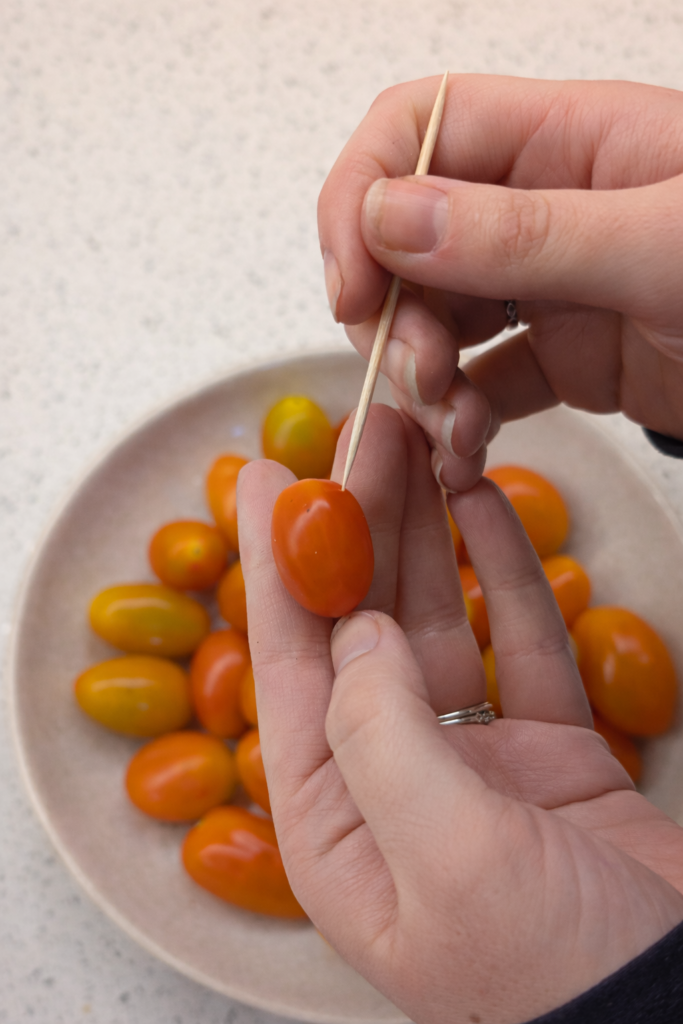
- Prick the small tomatoes with a toothpick to let the brine in. Chop the bigger tomatoes in half or into bitesize pieces.
- Weigh the tomatoes and work out what 2% of that number is. Add that amount of salt.
- Stir the tomatoes and salt together well, then cover with a cloth and leave at room temperature for at least 2 hours to draw the water out.
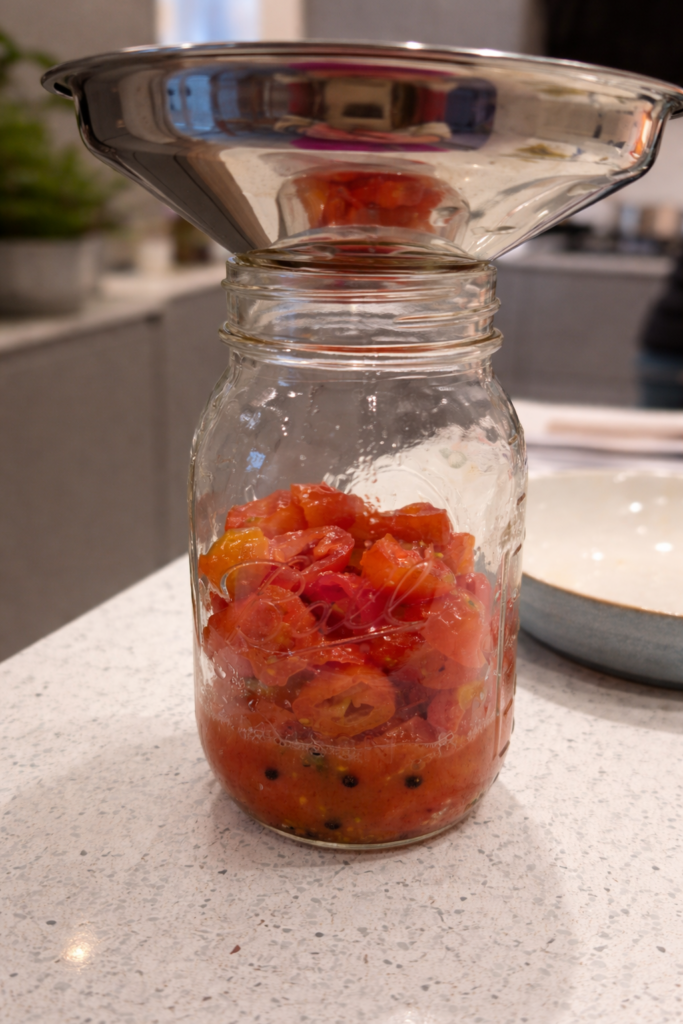
- Transfer into your jar and make sure that the tomatoes are fully submerged beneath the brine. If you need to mix them and squeeze them a little to get the water out, you can do so (I had to for this batch!). Weigh the tomatoes down with a fermenting weight, you don't want any to come to the top of the brine as this is where you'll get mould.
- At this point you can add any flavourings you like.
- Leave to ferment in a cool place or on your kitchen counter covered with a muslin cloth for around 5-7 days. Taste the tomatoes during this time until you get the flavour you're looking for.
- Store in the fridge for around 3-4 weeks to enjoy!